
How to Format a CV for the UAE Job Market
Understand the differences between Western CV standards and UAE employer expectations, including guidance on personal details and photographs.

Writing a Curriculum Vitae (CV) for the UAE job market requires balancing international professional standards with specific regional expectations. A format that is considered standard in North America or the UK may lack information that local recruiters expect, or conversely, include information that modern multinational companies advise against.
This guide breaks down how to structure a CV for employers in Dubai and Abu Dhabi, differentiating between general best practices and specific employer preferences.
The Debate: Photos and Personal Details
The most significant difference between a Western resume and a traditional Gulf CV is the inclusion of personal information. Historically, it was common practice in the UAE for CVs to include a professional headshot, date of birth, nationality, and marital status. This information was primarily used by employers to anticipate visa processing requirements, as UAE work visa quotas and costs can occasionally vary based on a candidate's demographic profile.
However, the market is currently split. These elements are not legal requirements for a CV, but rather varying employer preferences:
- Local Companies and Family Conglomerates (Common Practice): Often still prefer or expect personal details (nationality, current location, visa status) to quickly assess immigration viability.
- Multinational Corporations (Employer Preference): Companies operating out of free zones like the DIFC, guided by global Diversity, Equity, and Inclusion (DEI) policies, strongly discourage photos and unnecessary personal details to prevent unconscious bias.
General CV Best Practice: Tailor your approach. If applying to a global firm, use a standard Western format (no photo, no age/marital status). If applying to a local entity, including your nationality and current visa status (e.g., "On Tourist Visa" or "Requires Sponsorship") can pragmatically assist the HR department.
Optimize for Applicant Tracking Systems (ATS)
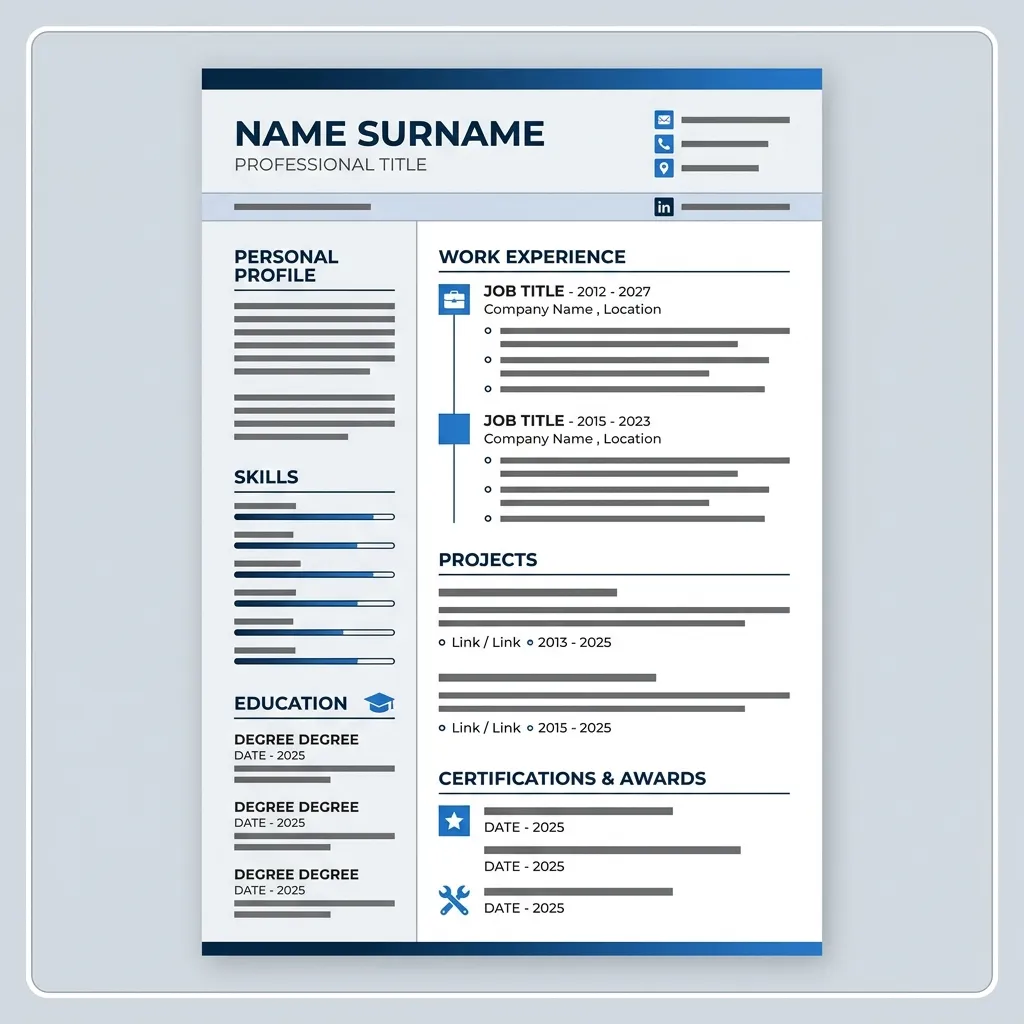
Some employers use Applicant Tracking Systems (ATS) or other automated screening tools to help process applications. Poor formatting can make a CV harder for some screening systems to parse and can reduce the chance that important information is processed correctly.
- Use a Clean Layout: Avoid heavy graphics, complex tables, or multi-column designs. Keep the layout simple and single-column.
- Standard File Formats: It is generally recommended to submit your CV as a standard PDF or Word document (.docx), as these formats are widely supported by most parsing software.
- Keyword Matching: Where appropriate, ensure the terminology used in your CV mirrors the skills and requirements listed in the job description.
Core CV Structure
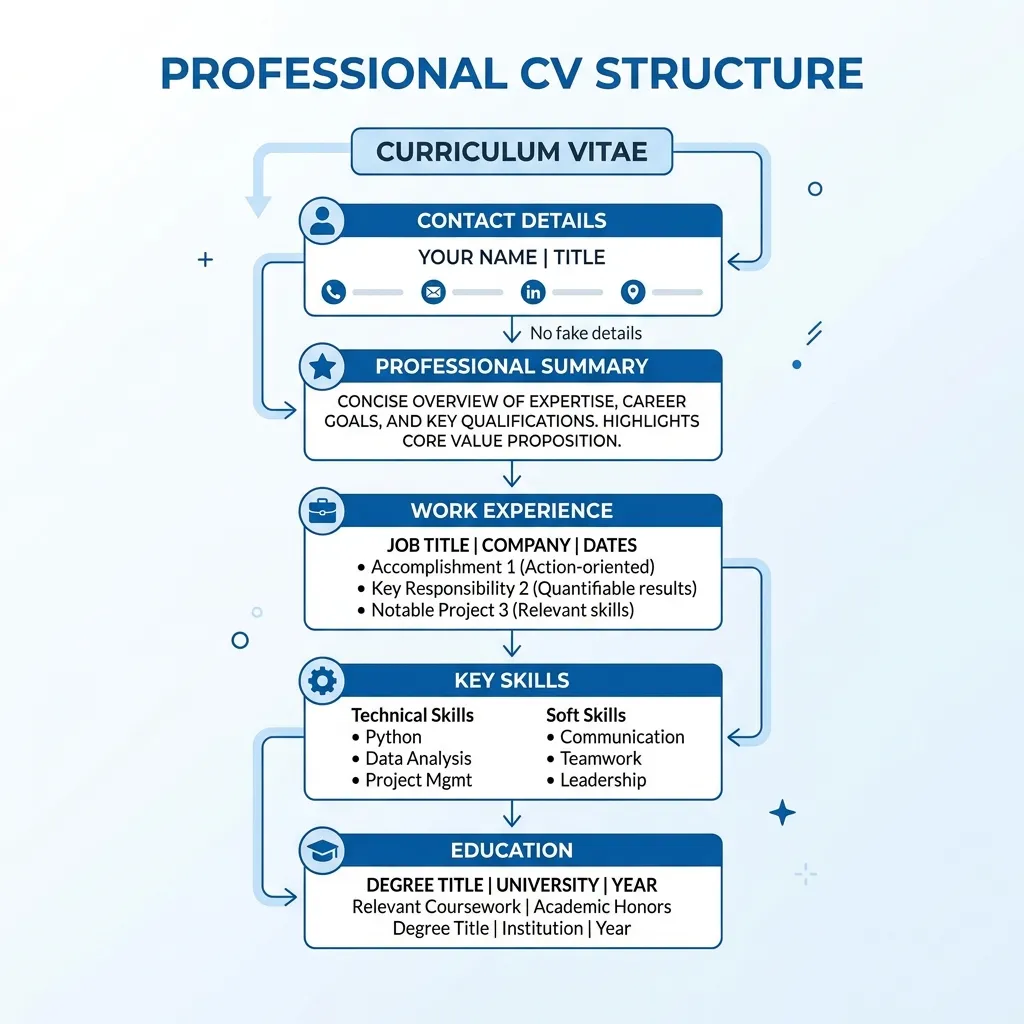
Beyond personal details, the structure of a successful UAE CV relies on clarity and quantified achievements.
1. Executive Summary
A concise three-to-four sentence paragraph replacing the outdated "Objective" statement. It should immediately establish your profession, years of experience, and core competencies. Highlighting regional experience (e.g., "5 years of MENA region experience") is considered a strong recruiter preference.
2. Professional Experience
List your work history in reverse chronological order. Because the UAE attracts talent globally, recruiters may not be familiar with your previous employers. It is a general best practice to include a one-sentence description of the company below the company name.
Use bullet points focused on quantifiable achievements rather than simply listing duties. For example, "Managed a $2M budget and reduced operational costs by 12%" is significantly more effective than "Responsible for budget management."
3. Education and Certifications
List your highest degrees, the institution, and the year of graduation. Certain professions in the UAE (especially engineering, healthcare, and education) legally require degrees to be attested by the UAE Ministry of Foreign Affairs (MOFA) before a work visa can be issued. Highlighting that your degree is already attested can be a minor competitive advantage.
4. Language Skills
Dubai is a deeply multilingual business environment. Always include a language section. Specify your proficiency in English, and clearly list any competency in Arabic, Hindi, Urdu, French, or other widely spoken regional languages.
Sources and References
- UAE Government Portal: Seeking Employment (General guidelines for the UAE labor market and required degree attestations for specific visas).
- CV recommendations in this article reflect general HR best practices and common conventions observed by regional consultancies.